Feature Film Funding Complete Guide
Crowdfunding, private investors, equity, grants, presales, tax incentives, and more: ten ways indie features raise money, each explained in plain language.
- Format
- Pages
- 10-page guide
- Best for
- First-time feature producers
- License
- Free for personal use
Why this guide
Every indie feature is funded by a combination of sources.
There is no single way to fund a feature film. The films that get made are usually patched together from three or four sources, such as a small crowdfund, a private investor, a grant, and a tax credit, each with its own paperwork and expectations.
This guide walks through the ten most common methods. The goal isn't to recommend one path. It is to make sure you know which paths exist and what each one asks of you.
What it looks like
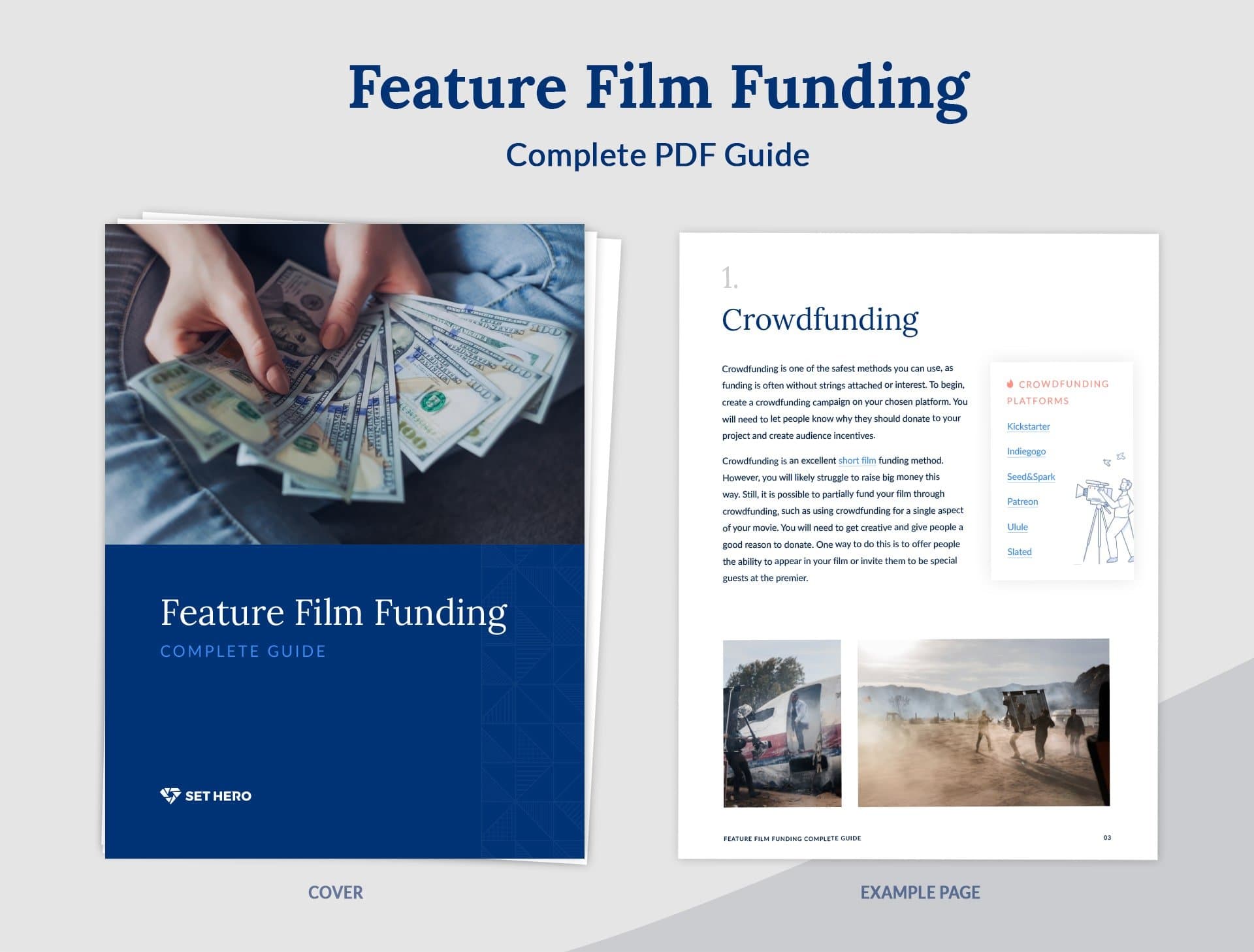
Ten pages, ten methods.
Designed and typeset like a serious financing document — share it with a partner, print it for your producing team, send it to a friend who's about to ask their first investor.
Plain-English explanations
Each method described in language that holds up in a real conversation.
One method at a time
How it works and where it fits, method by method.
Soft money first
For a low-budget film, the guide points to a mix of soft-money options as the safer start.
A typeset PDF
Share it on screen or print it for your producing partner.
Inside the guide
Ten methods, from crowdfunding to gap financing.
The order they appear in the guide.
Methods 1 to 5
1. Crowdfunding
Kickstarter, Indiegogo, Seed&Spark, Patreon — best for partial funding or specific phases.
2. Private investors
Friends-and-family money, with documentation.
3. Equity
Standard equity deals and the paperwork an entertainment lawyer will want to see.
4. Filmmaking grants
Foundation, festival, and regional grants — and the strict criteria each one demands.
5. Product placement
Brand integrations as a partial or supplemental finance source.
Methods 6 to 10
6. Tax incentives
State-by-state programs and how to structure a production to qualify.
7. Pre-sale distribution
Selling territory rights before delivery; what a sales agent will want.
8. Negative pickup
Distributor commits to acquire on delivery; producer finances the gap.
9. Bank loans
Production loans against collateral — pre-sales, tax credits, or equity.
10. Gap financing
High-interest short-term capital for the gap between budget and committed funds.
- 01
Comprehensive
Ten financing methods in one document, from crowdfunding to gap financing.
- 02
Professional
Written for a producer raising money, in plain language.
- 03
Beautiful
Hand-laid, properly typeset, and good enough to share with an investor who hasn't read a deck before.
- 04
Free
Enter your email and we send the file.
Pair it with
All templates
Bundle
Feature Film Paperwork Bundle
Nine templates for an indie feature in one folder: checklist, treatment, breakdown, budget, storyboards, stripboard, crew contract, rental agreement, and call sheet.
Reference
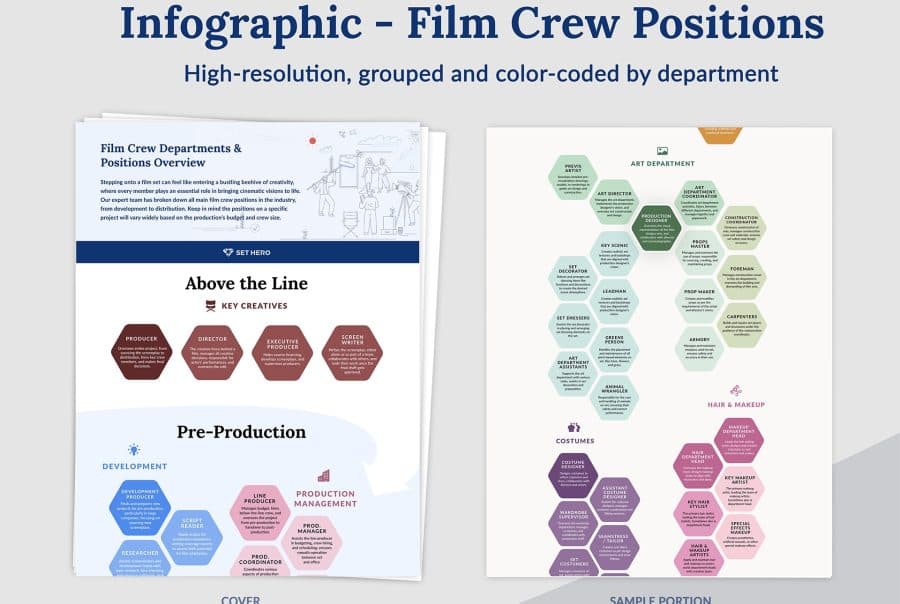
Film Crew Departments and Positions
An infographic mapping every department and position on a typical feature crew. Useful for new producers and first-time ADs.
Pre-Production
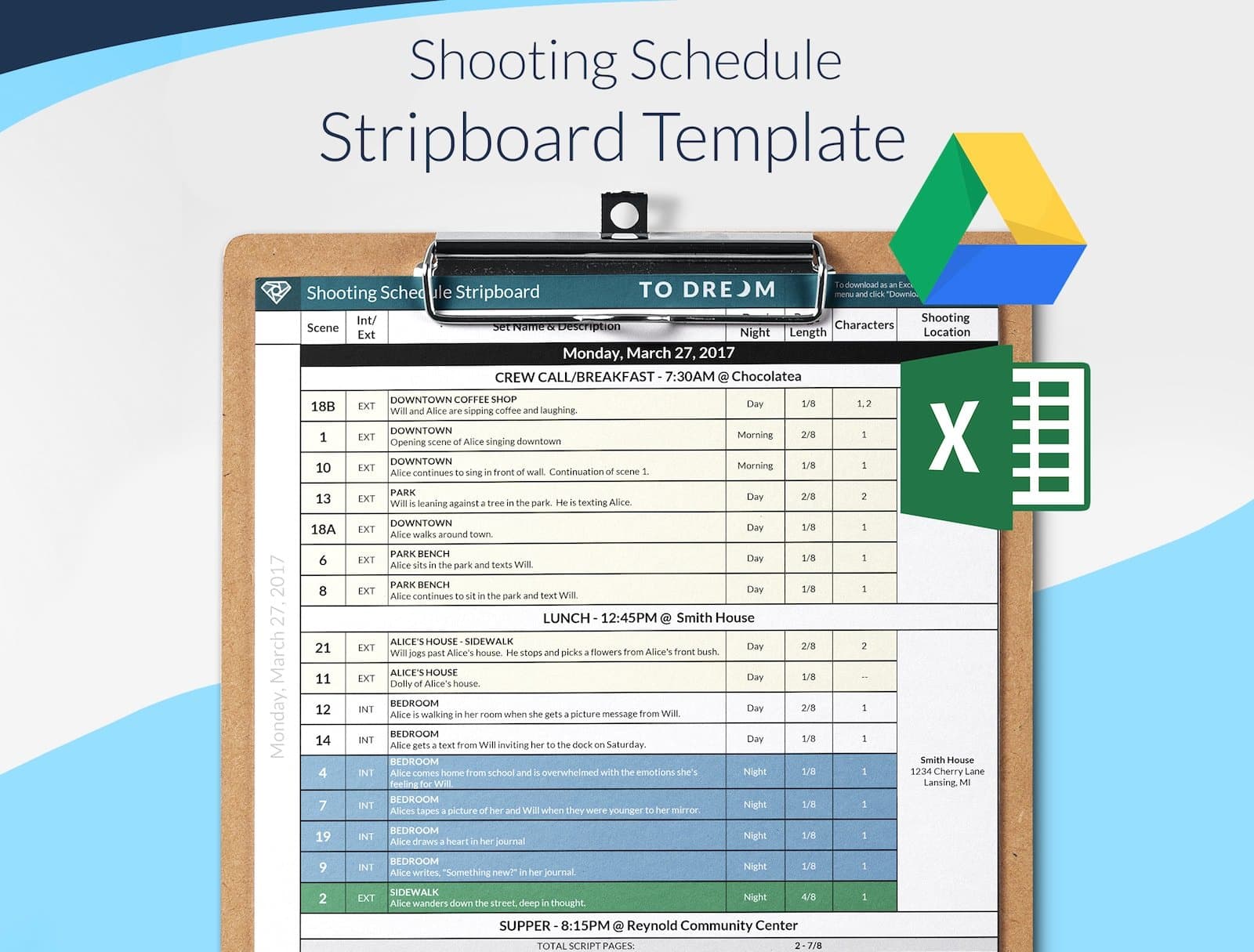
Professional Stripboard Template for Excel
Color-coded strips, day breaks, and page totals: a stripboard in Excel and Google Sheets.